
Onboard Medical Care at Sea: What Cruise Ships Can and Cannot Treat

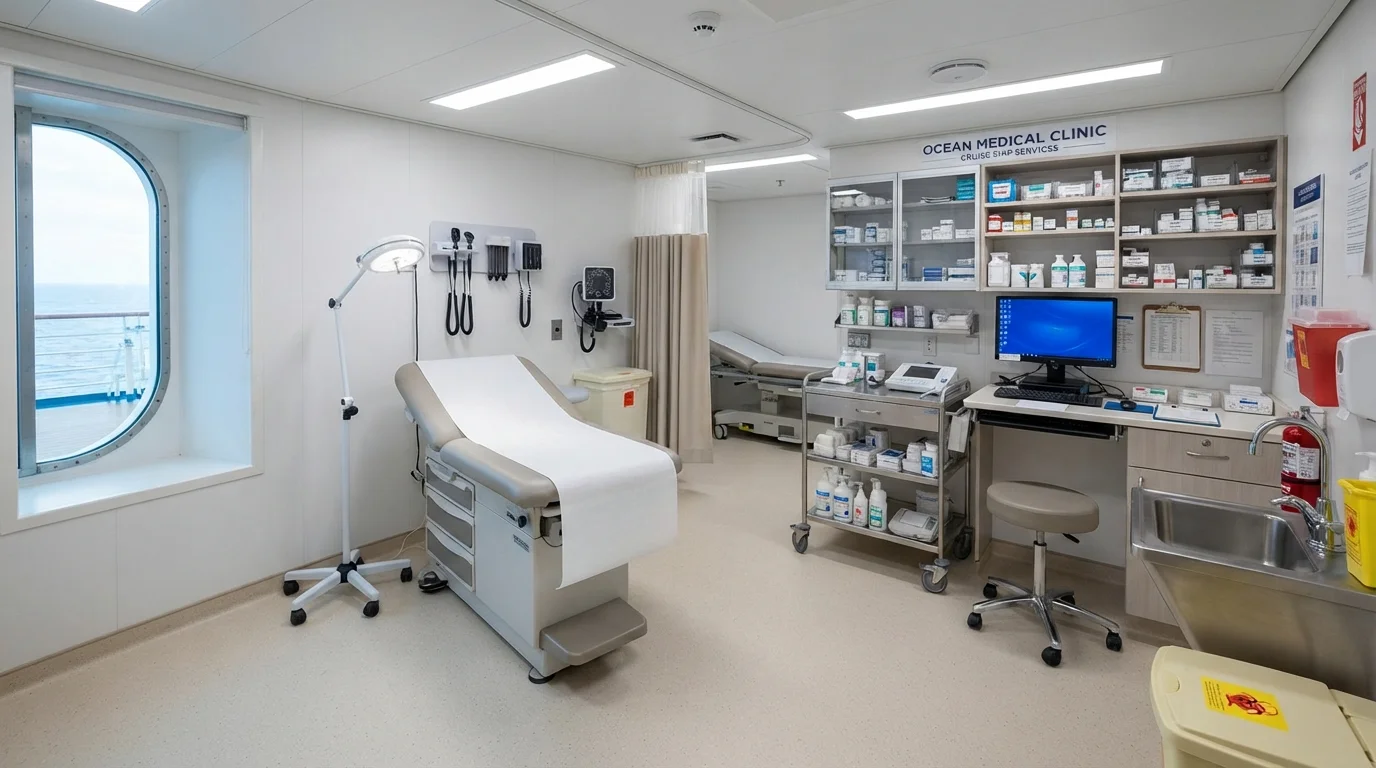
Cruise ships carry medical staff and basic facilities, but have real limitations. Understand what care is available and when evacuation becomes necessary.
Key takeaways
- Cruise ship medical centers can handle many common illnesses and injuries, but have real equipment and staffing limits.
- Costs for onboard medical care are charged directly to passengers and can be substantial.
- Serious conditions often require evacuation to a shoreside hospital, which adds significant expense.
- Passengers with chronic or complex medical conditions should plan carefully before sailing.
- Travel insurance with medical evacuation coverage is a practical safeguard, not an optional extra.
What is typically on a cruise ship medical center
A large ocean cruise ship usually has a medical center staffed around the clock. The American College of Emergency Physicians has published guidelines recommending that ships carrying more than 100 passengers employ at least one physician and two nurses. Beyond staffing, those guidelines address equipment: a functioning defibrillator, oxygen supply, cardiac monitor, basic laboratory testing capability, and a small inventory of prescription and over-the-counter medications.
Most major cruise lines meet or exceed those baselines on their larger vessels. A typical center includes an examination room, a short-stay recovery area with a few beds, an X-ray machine, and the ability to run blood and urine tests. Telemedicine links to shoreside specialists are common, so the ship's doctor can consult with a cardiologist or radiologist while still at sea.
What you will not find is an operating room for complex surgery, intensive care unit beds, or advanced imaging such as a CT scanner. The center is equipped for stabilization, diagnosis of common conditions, and short-term treatment, not for procedures that require a full hospital environment.
Conditions the medical center can manage
Onboard staff routinely handle a wide range of everyday medical problems. These include respiratory infections, gastrointestinal illness, sunburn, minor fractures, lacerations that need suturing, seasickness, allergic reactions, urinary tract infections, and mild to moderate dehydration. Cardiac monitoring and basic life support, including defibrillation, are available if a passenger experiences chest pain or a cardiac event.
Wound care after a shore excursion injury, management of a flare in a known chronic condition, and prescription refills for travelers who run short are also within the typical scope of care. The medical team can assess whether a passenger is stable enough to continue the voyage or needs to disembark at the next port.
Bring your full medical records summary
Carry complete, up-to-date records of your conditions, medications, and any recent test results. For passengers managing diabetes, asthma, or cardiovascular conditions, the ship's doctor can provide supportive care during a flare, but cannot substitute for your regular specialist.
For passengers managing diabetes, asthma, or cardiovascular conditions, the ship's doctor can provide supportive care during a flare, but cannot substitute for your regular specialist. Bring complete, up-to-date records of your conditions, medications, and any recent test results.
Where onboard care reaches its limits
The medical center is not a substitute for a hospital. Complex surgeries, advanced neurology workups, high-dependency cardiac care, dialysis, psychiatric emergencies requiring inpatient stabilization, and cancer-related treatment are beyond what shipboard facilities can provide. A ship carrying a passenger in the middle of a stroke or a major heart attack can begin stabilization, but will coordinate evacuation as quickly as possible.
Obstetric care is another area with firm limits. Many cruise lines restrict passengers past a certain point in pregnancy from sailing at all, and the medical center is not equipped for delivery complications or neonatal emergencies. Travelers planning multi-generational sailings that include pregnant family members or very young children should review their cruise line's specific policies carefully.
Mental health crises present a different kind of limit. Staff can provide basic assessment and, in some cases, sedation for acute safety risks, but there is no psychiatric inpatient capacity onboard. Passengers with serious mental health histories should discuss voyage plans with their own providers before sailing.
Medical evacuation: how it works and what it costs
When a passenger's condition exceeds what the medical center can manage, the ship's physician makes an evacuation call. Depending on the ship's location, that means either diverting to the nearest port, arranging a helicopter evacuation at sea, or transferring the passenger by tender to a waiting vessel or dock. The decision is medical, not administrative, and the captain is obligated to act on the physician's recommendation.
Evacuation is expensive. A helicopter medevac at sea can cost $20,000 or more. Shoreside hospital care in another country, followed by medical repatriation to the United States, can push total costs well into six figures. None of that is covered by standard health insurance plans, and Medicare does not cover care outside the United States.
Travel insurance with dedicated medical evacuation coverage addresses this gap directly. Cruise travel insurance explained covers what different policy types include and how to read the fine print before you buy. Understanding how ship emergency procedures work gives context on how the crew coordinates during a medical crisis at sea.
Practical steps before you sail
Bring a written summary of your current medications, dosages, allergies, and any chronic conditions. Keep medications in original containers with pharmacy labels. Pack enough supply for the full trip plus at least three to five extra days to cover delays.
If you use medical devices such as a CPAP machine, insulin pump, or portable oxygen concentrator, contact the cruise line in advance. Ships can often accommodate these, but some require advance notice and documentation. Power outlets and storage space have limitations, so confirming arrangements early avoids problems once you board.
Review your health insurance policy's out-of-network and out-of-country provisions before departure. If the coverage is limited, consider a standalone travel medical or evacuation policy. Passengers with complex or unstable health conditions should get written clearance from their own physician and share that documentation with the ship's medical center upon embarkation.
This article provides general travel information only and is not a substitute for personalized medical advice. Consult a qualified healthcare professional before traveling if you have concerns about your health or the suitability of cruise travel for your specific situation.
Frequently Asked Questions
The content on this site is for informational purposes only and is not a substitute for professional advice. Always consult a qualified professional for guidance specific to your situation.