
How Cruise Ship Safety Drills and Emergency Procedures Actually Work

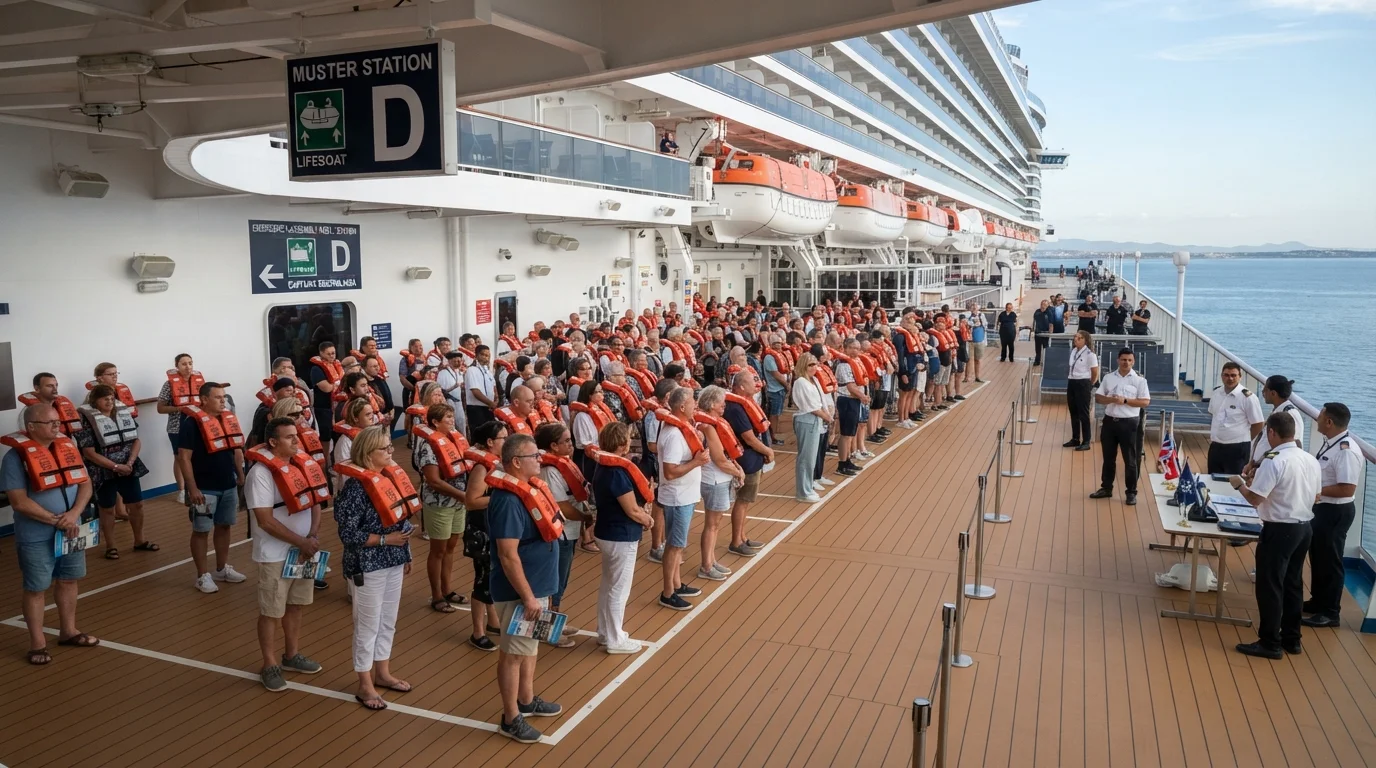
Muster drills are required by international maritime law. Here's what they involve, why they matter, and what to do if a real emergency occurs onboard.
Key takeaways
- Every cruise passenger must complete a muster drill before the ship leaves its first port.
- Your muster station assignment is printed on your cabin key card or listed in the cruise line's app.
- The ship's alarm signal for general emergency is seven short blasts followed by one long blast on the horn.
- Life jackets are stored in your cabin, and the drill teaches you how to put one on correctly.
- Passengers traveling with children or older adults have specific considerations to plan for before the drill.
- If a real emergency occurs, follow crew instructions and do not return to your cabin for belongings.
Why the muster drill is mandatory
The muster drill exists because emergencies at sea leave little time for passengers to figure out what to do on their own. The International Maritime Organization's SOLAS regulations require cruise lines to ensure every passenger receives a safety briefing before the ship clears its departure port. Missing this briefing is not an option: crew members are trained to follow up with any passenger who has not completed it.
The drill covers four things: where your muster station is, how to reach it from different parts of the ship, how to put on a life jacket properly, and what the general emergency alarm sounds like. That alarm, seven short blasts followed by one long blast, is the signal to go immediately to your muster station.
For a broader view of onboard safety considerations, the guide to onboard medical care covers what happens after an emergency when medical attention is needed.
How the e-muster format works
Since 2020, most major cruise lines have shifted to an e-muster system under updated SOLAS guidance. Instead of gathering all passengers on deck at the same time, each passenger watches a safety video through the cruise line's app or an in-cabin screen, then walks to their assigned muster station to check in with a crew member.
This check-in is not optional. The video alone does not count as completion. A crew member scans your card or confirms your name, which logs you as briefed in the ship's system.
Complete your e-muster before you board
Many cruise lines allow passengers to watch the safety video through the app in the days before departure. Doing this in advance means less to manage on embarkation day, when lines at muster stations tend to be longest. You still need to check in at the station in person, but the video step is already done.
The e-muster approach reduces crowding and lets passengers complete the briefing at their own pace within a set window, typically before the ship departs or within a few hours of boarding. Check the cruise line's instructions when you board so you know the deadline.
What happens during a real emergency
When the general emergency alarm sounds, passengers should move directly to their muster station. The station number and location appear on your cabin key card. Signs with life jacket symbols are posted throughout the ship to guide you there.
Crew members at each station give instructions for the next steps, which may include boarding a lifeboat or life raft. Lifeboats on modern cruise ships are fully enclosed, motorized vessels with food, water, and first aid supplies. They are launched by trained deck officers, not passengers.
A few practical points to keep in mind:
- Life jackets are stored in your cabin closet or under the bed. Put it on before leaving your cabin if the alarm sounds.
- Do not use elevators during an emergency. Stairwells are the correct route.
- Do not go back for luggage or valuables once you are heading to your muster station.
- If you are in a pool, restaurant, or entertainment venue when the alarm sounds, crew members in that area will direct you.
Passengers traveling with children or older adults should read the preparation guide for multi-generational cruising before departure, since those groups require specific planning around emergency procedures.
Crew roles and ship-wide coordination
Every crew member has an assigned emergency role listed on a muster card posted inside their cabin door. The ship's captain has overall command. Officers on the bridge manage navigation and communication with the coast guard. Deck officers supervise lifeboat stations. Hotel staff and entertainment crew direct passengers and maintain order at muster stations.
Cruise ships are also required to conduct regular internal drills among crew, separate from passenger drills, to practice coordination between departments. These drills test fire response, flooding scenarios, and man-overboard procedures.
1974
Year SOLAS muster drill requirements were formalized
The International Convention for the Safety of Life at Sea (SOLAS) established mandatory passenger safety briefing requirements, with updates continuing through the 2020 e-muster amendments.
7 + 1
Blasts in the general emergency alarm signal
Seven short blasts followed by one long blast is the SOLAS-standard alarm passengers must recognize as the signal to proceed immediately to their muster station.
If you want to understand what safety standards apply more broadly during your trip, the article on cruise ship sanitation inspections explains the regulatory framework that governs onboard conditions.
Preparing before you board
Download the cruise line's app before you sail and look for the safety or muster section. Many lines let you watch the safety video before you even board, so you arrive already familiar with the material.
Pack a small waterproof pouch with your passport, travel insurance documents, and any essential medication in a place you can grab quickly. Your cruise packing checklist can help you organize documents and safety items before departure.
If you have a mobility limitation, inform the cruise line when booking. Ships have designated accessible muster stations and crew assigned to assist passengers who cannot use stairs. This arrangement needs to be confirmed in advance, not on the day you board.
Port days carry their own safety considerations separate from onboard emergencies. The port day safety guide covers what to watch for when you leave the ship.
Frequently Asked Questions
The content on this site is for informational purposes only and is not a substitute for professional advice. Always consult a qualified professional for guidance specific to your situation.