
Timing Belts and Timing Chains: What Drives Your Engine and Why It Matters

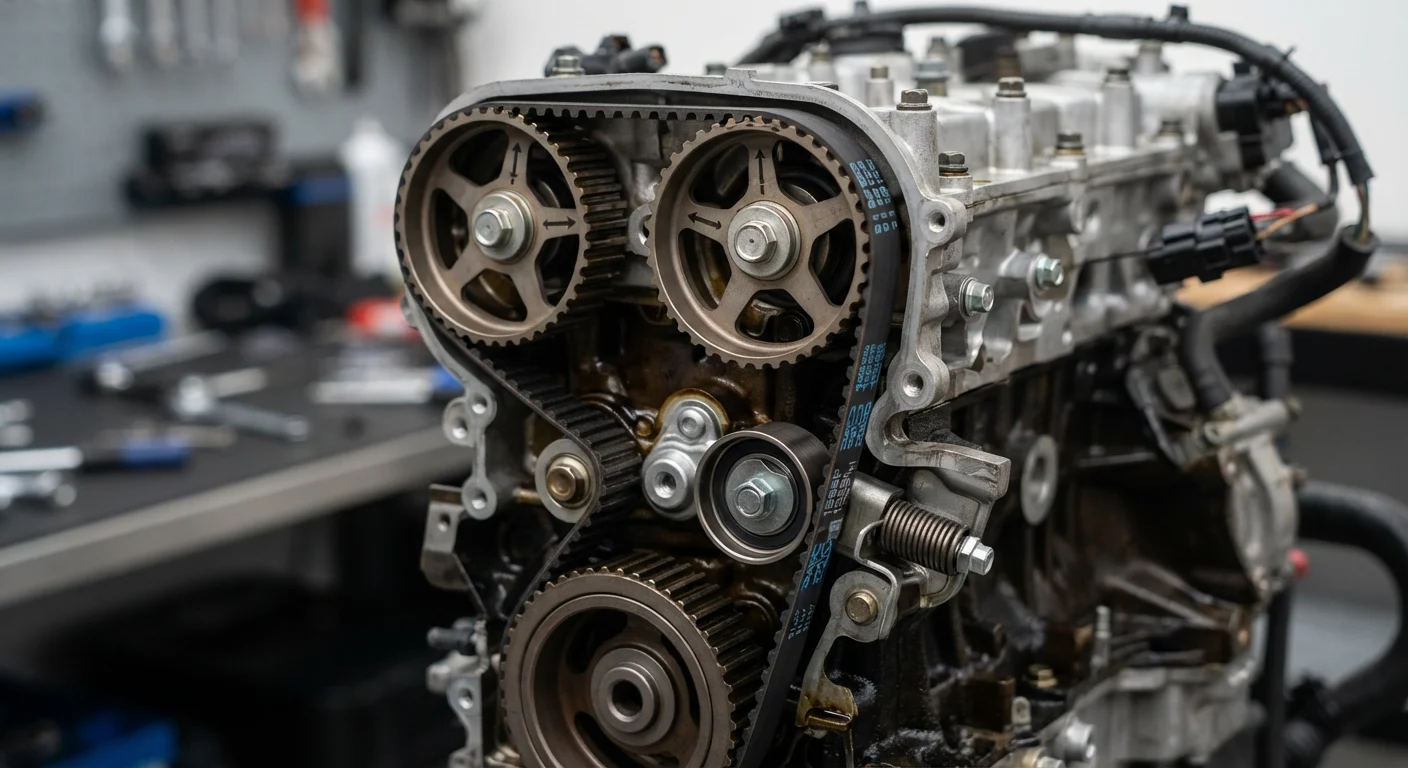
Understand the difference between timing belts and chains, how each wears over time, and why missing a replacement interval can be costly.
Key takeaways
- Timing belts are rubber and require scheduled replacement, typically between 60,000 and 100,000 miles depending on the manufacturer.
- Timing chains are metal and generally last the life of the engine if oil is changed regularly.
- A snapped timing belt can destroy an engine in seconds; following the replacement schedule is not optional.
- Your owner's manual is the only reliable source for your vehicle's specific interval.
- Signs of timing belt wear include a ticking noise from the engine, difficulty starting, or misfires, but belts often fail with no warning at all.
What each component actually does
Every four-stroke engine depends on precise coordination between the crankshaft and the camshaft. The crankshaft converts the up-and-down motion of pistons into rotation. The camshaft opens and closes the intake and exhaust valves. If these two shafts fall out of sync by even a small amount, the engine misfires or, in the worst case, destroys itself internally.
The timing belt or chain is the mechanical link that keeps them synchronized. It wraps around sprockets on both shafts and holds a fixed positional relationship between them. Without it, the engine cannot run.
Most modern engines also use the camshaft timing to drive ancillary systems such as variable valve timing, which adjusts performance and fuel efficiency based on driving conditions. Accurate timing is therefore not just about avoiding damage; it affects how well the engine performs every day.
Belts versus chains: the practical differences
Rubber timing belts are lighter and quieter than chains. Engineers chose them widely through the 1980s and 1990s because they reduce noise and cost less to manufacture. The trade-off is that rubber degrades. Heat, oil contamination, and simple age cause the belt to crack, fray, or strip teeth. Because the belt sits inside a sealed cover, drivers cannot inspect it visually during normal maintenance.
Metal timing chains are heavier and generate slightly more noise, which is why many older engines used a rubber damper alongside them. Their durability advantage is significant: a chain lubricated by engine oil can last 200,000 miles or more when the oil is changed on schedule. Many automakers returned to chains in the 2000s and 2010s for that reason.
Replace related parts at the same time
When a shop opens the timing cover for a belt replacement, the water pump and belt tensioner are already accessible. Both have similar lifespans to the belt itself. Replacing them during the same service call avoids a repeat of the same disassembly labor within a few years, which can cost as much as the original job.
Whether your engine uses a belt or chain, the maintenance that affects it most directly is oil change frequency. Sludge buildup is a documented cause of chain tensioner failure and belt cover seal leaks. Routine maintenance decisions compound over time, and the timing system is one area where neglect has immediate mechanical consequences.
Why the replacement interval matters so much
Automakers publish specific replacement intervals for timing belts because the rubber has a predictable service life. A common range is 60,000 to 100,000 miles, though some engines specify intervals by time as well as mileage. The actual number for your engine is in the owner's manual, and that number is the only one that applies to your vehicle.
The interval exists because rubber belts rarely give visible warning before failure. Unlike a tire that shows wear or a brake pad that squeals, a timing belt can look acceptable and snap without notice. In an interference engine, that snap causes immediate valve and piston collision. Repair bills for that damage routinely exceed $3,000 and can total a vehicle entirely.
When scheduling a timing belt replacement, ask the shop about the water pump and belt tensioner. Both components are accessible during the same disassembly, and both have similar service lives. Replacing them at the same time avoids paying for the same labor twice within a few years. Other interval-based maintenance items follow similar logic: the cost of replacement is almost always lower than the cost of the failure it prevents.
Recognizing warning signs and knowing when to act
Timing chains sometimes produce a rattling or ticking sound from the front of the engine on cold starts. This can indicate a worn chain, a failing tensioner, or low oil pressure. The sound often clears as the engine warms and oil pressure builds, which is why drivers dismiss it. Do not dismiss it. A mechanic should inspect any persistent cold-start noise from the engine front.
With timing belts, warning signs are uncommon, which is precisely why sticking to the scheduled interval matters. On some vehicles, a high-pitched whine or ticking from the belt area can indicate a failing tensioner pulley. Any unusual noise from inside the timing cover warrants prompt inspection.
If a vehicle you are considering buying has an unknown service history, find out whether the timing belt has been replaced. A used car with 90,000 miles and no documented belt replacement carries a real mechanical risk. That context is worth considering alongside other purchase factors covered in vehicle purchase decisions.
Frequently Asked Questions
The content on this site is for informational purposes only and is not a substitute for professional advice. Always consult a qualified professional for guidance specific to your situation.