
Envelope Budgeting: The Cash-Based Method That Still Holds Up

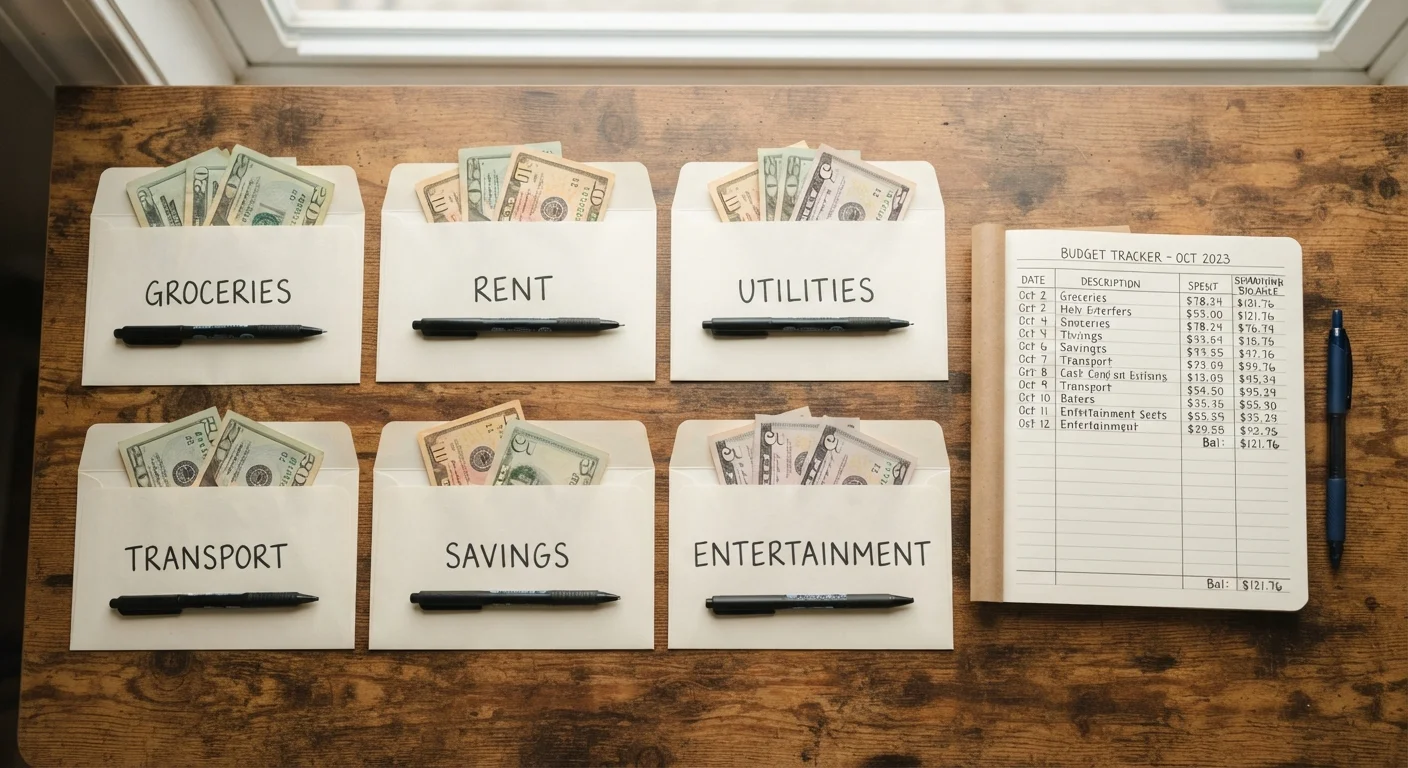
Envelope budgeting uses physical or digital cash allocations to limit overspending by category. Here's how it works and who tends to benefit most from it.
Key takeaways
- Envelope budgeting works by giving each spending category a hard cash limit before the month starts.
- Physical cash creates a tangible barrier against overspending that digital payments often lack.
- Digital envelope tools let you apply the same logic without carrying cash.
- The method works best for variable spending categories like groceries, dining, and entertainment.
- Fixed bills such as rent and utilities are typically paid outside the envelope system.
- People prone to overspending on discretionary items tend to see the most immediate benefit.
How envelope budgeting works
The setup is straightforward. At the start of each month, you list every spending category you want to control, assign a dollar amount to each based on your income, and either fill physical envelopes with cash or set up virtual equivalents in an app or spreadsheet.
Throughout the month, you spend only from the relevant envelope. Buying groceries? Pull from the grocery envelope. Going out for dinner? Use the dining envelope. Once an envelope reaches zero, that category is closed until next month. There is no borrowing from next month and no ignoring the limit.
Fixed expenses like rent, car payments, insurance, and utility bills generally sit outside the envelope system. Those amounts are predictable and typically paid by check, bank transfer, or autopay. The envelope method focuses on the variable, day-to-day categories where overspending is most common.
For a broader picture of how budgeting frameworks fit together, see our guide to personal budgeting.
Why cash creates a different kind of discipline
Swiping a card or tapping a phone to pay feels frictionless, which is partly why it is easy to overspend. You rarely have a concrete sense of how much is left. Physical cash removes that ambiguity. When the envelope thins out, you can see and feel it.
Behavioral research on payment methods consistently shows that people spend less when using cash than when using cards, because the transaction feels more real. Handing over bills registers as a loss in a way that a tap does not. Envelope budgeting uses that psychological friction deliberately.
Making digital envelopes work
Digital envelope apps work for many people who find carrying cash impractical. The important thing is that you treat virtual limits as firm. If the app shows a category is empty, stop spending there for the month, just as you would with physical cash in hand.
Digital envelope apps work for many people who find carrying cash impractical. The important thing is that you treat virtual limits as firm. If the app says the grocery envelope is empty, you stop, just as you would with physical cash.
Who benefits most from this method
Envelope budgeting is well-suited to people who consistently overspend in a handful of categories and want a concrete way to stop. It is also a practical starting point for anyone new to budgeting who finds spreadsheets or percentage-based systems abstract. The method gives you immediate, visual feedback without requiring financial expertise.
It works less well for households with very tight cash flow where every dollar is already accounted for with little flexibility, or for people whose income arrives unevenly throughout the month and makes pre-loading envelopes difficult.
If you are weighing different budgeting tools, our comparison of budgeting formats covers how manual, spreadsheet, and app-based methods stack up against each other.
Setting up your envelopes in practice
Start by listing your monthly take-home income and subtracting fixed costs: rent or mortgage, utilities, insurance, loan payments, and any subscriptions. What remains is the amount available to divide among envelopes.
Common envelope categories include groceries, dining out, fuel or transportation, personal care, entertainment, clothing, and household supplies. Some people add a small miscellaneous envelope to absorb small purchases that do not fit neatly elsewhere.
Set limits based on recent spending history if you have it. If you have been spending around $400 a month on groceries and want to reduce that, set the envelope at $350 and track whether the limit is realistic. Adjust after the first month based on what actually happened, not what you hoped would happen.
Savings works well as its own envelope, funded before the discretionary ones. This connects naturally to building an emergency fund. Our article on emergency funds and budgets explains why that financial buffer matters and how to size it.
This article provides general financial information for educational purposes and does not constitute personalized financial advice. Consult a qualified financial professional for guidance specific to your situation.
Frequently Asked Questions
The content on this site is for informational purposes only and is not a substitute for professional advice. Always consult a qualified professional for guidance specific to your situation.