
Travel Towels: What They Are and When They Actually Make Sense

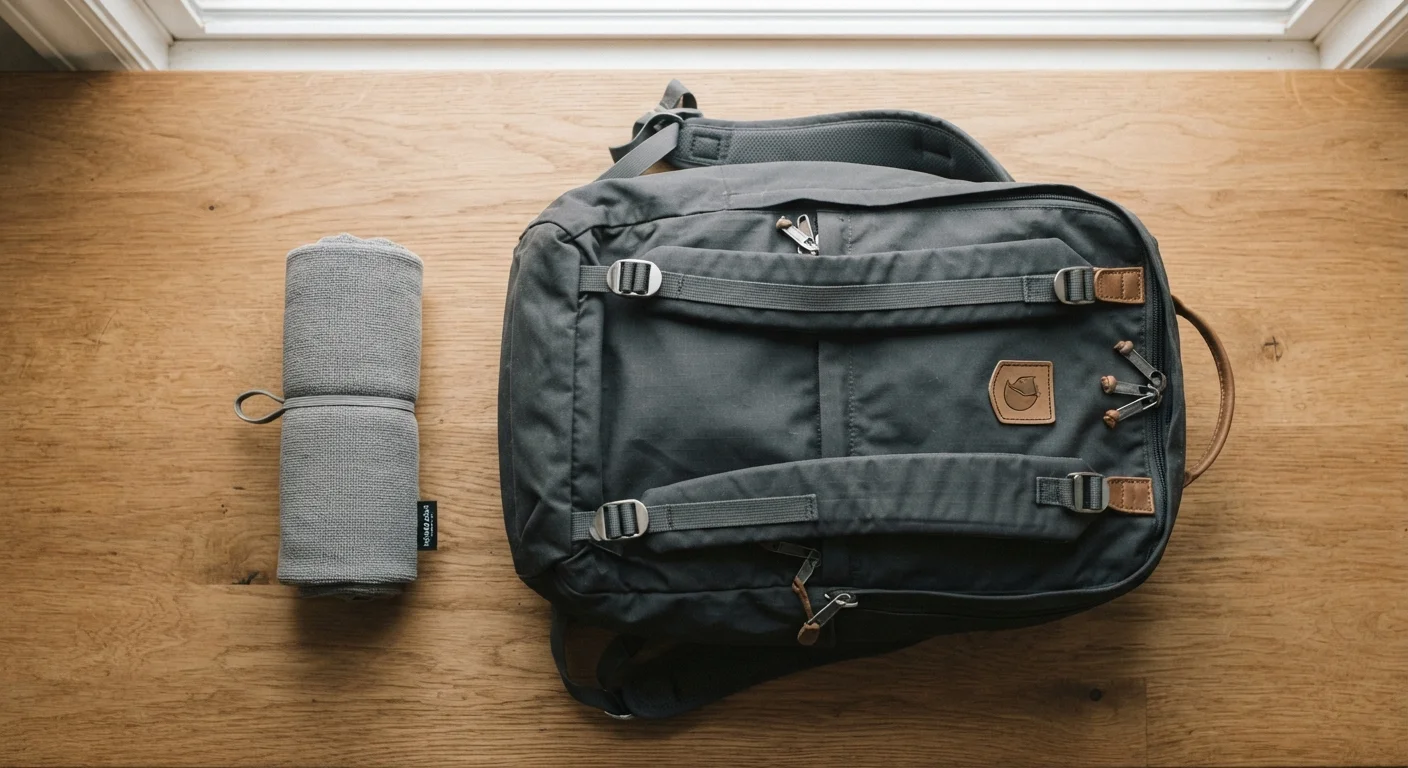
Microfibre travel towels are popular but misunderstood. Here is what they offer, where they fall short, and the trips they are genuinely worth carrying.
Our Verdict
Travel towels solve a specific problem: carrying a compact, fast-drying option when no towel will be supplied or when bag space is tight. For most hotel-based trips, they are unnecessary. For backpacking, hostel travel, beach-heavy itineraries, or any trip where laundry access is limited, they earn their place in a bag.
Travelers who stay in hostels, camp, or move frequently between destinations without guaranteed towel access.
Key takeaways
- Travel towels are typically made from microfibre and dry faster than cotton but feel different against the skin.
- They make the most sense for backpacking, camping, hostel stays, and trips where towels are not provided.
- For hotel-heavy itineraries, a travel towel adds weight and bulk without a real benefit.
- Absorbency and softness vary by weight and weave; lighter versions absorb less.
- A travel towel is one item worth evaluating against your specific trip type before packing it.
What a travel towel actually is
A travel towel is a compact, lightweight towel made from synthetic fabric, most commonly microfibre. Microfibre is a tightly woven material, usually a blend of polyester and polyamide, that absorbs water relative to its weight and releases that moisture into the air faster than cotton does. The result is a towel that can dry in one to two hours in a ventilated space, compared to several hours for a standard cotton bath towel.
They come in a range of sizes. A small version (roughly 16 by 32 inches) covers face and hands. A large version (around 30 by 60 inches) works as a full body towel or beach sheet. Most roll or fold into a stuff sack the size of a water bottle or smaller, which is the feature that makes them relevant to packing decisions.
For a broader look at how towels fit into overall gear planning, see the overview of travel gear categories.
Where they genuinely help
Dries significantly faster than cotton
Microfibre releases absorbed water quickly in ventilated conditions, making the towel ready to repack within an hour or two rather than overnight.
Compresses to a fraction of cotton's volume
A full-sized travel towel typically packs to the size of a large water bottle, which matters most on carry-on-only or multi-destination trips.
Covers gaps when accommodation does not supply towels
Hostels, campsites, and some budget guesthouses do not provide towels; having one avoids rental fees or a last-minute purchase.
Lighter than a standard bath towel
A mid-weight travel towel typically weighs 3 to 6 ounces, compared to 1.5 to 2 pounds for a cotton bath towel of the same size.
The clearest use case is any trip where towels are not reliably provided. Budget hostels, camping grounds, some guesthouses, and multi-day hiking routes all fall into this category. Carrying a travel towel removes the need to guess whether bedding will include one or to rent a towel at check-in.
Beach and water-focused trips are another practical fit. A large microfibre towel dries between swims far faster than a cotton beach towel, and it takes up a fraction of the bag space. For travelers who pack carry-on only, that difference is significant. The common myths about packing light article covers how small gear decisions compound across a full packing list.
Where they fall short
Texture is noticeably different from cotton
Microfibre weaves can feel rough or slightly abrasive against wet skin; this is a consistent property of the material, not a quality issue.
Absorbency has a lower ceiling than cotton
Lighter-weight travel towels saturate faster and may need wringing out mid-use, which is inconvenient when drying off after a shower.
Unnecessary weight for hotel-based travel
When accommodation reliably supplies towels, a travel towel occupies bag space without providing any functional benefit.
Can retain odors if not dried fully before storing
Packing a damp microfibre towel in a sealed stuff sack for more than a few hours can produce a musty smell that is difficult to remove without a proper wash.
Microfibre has a texture that some people find uncomfortable. It can feel slightly rough or clingy against wet skin, particularly in cheaper or lighter-weight versions. This is not a defect; it is a property of the weave. Travelers who are sensitive to texture often find the adjustment takes more than one trip.
Absorbency also has limits. A very thin travel towel absorbs less total water than a cotton equivalent of the same size. After one full-body dry-off, a small or medium travel towel may be saturated and need wringing out before a second use. This matters less for a solo traveler but is worth knowing before assuming a single small towel will cover multiple people.
When to skip it
For a trip spent entirely in hotels or resorts that supply towels, a travel towel adds weight without solving anything. The same applies to a short city trip with checked luggage, where bag space is not constrained. In those situations, using the hotel's towels is simpler and leaves room for other items.
If you are uncertain whether your accommodation provides towels, confirm before packing rather than defaulting to bringing one. Most booking platforms list amenities, and a quick message to the property takes less time than carrying an item you will not use. Good pre-trip planning, including verifying what your accommodation supplies, is covered in the guide to building a travel itinerary.
Check before you pack
Most accommodation listing sites display amenity details, including whether towels are provided. Verifying this before departure takes less than a minute and can remove a travel towel from your packing list entirely. If the listing is unclear, a short message to the property will confirm it. Do not assume either way.
Travelers who are new to packing decisions can find a broader starting point in the first-time traveler packing guide, which covers gear fundamentals before getting into specific items.
Choosing the right size and weight
Travel towels are sold by weight class: ultralight versions compress the smallest but absorb the least. Mid-weight versions balance absorbency and pack size reasonably well. Heavy versions approach the feel of a cotton towel but give up most of the size advantage.
A practical approach is to match size to primary use. A gym-sized towel (around 20 by 40 inches) works for hostel showers and light beach use. A full-sized version (30 by 60 inches) is necessary if the towel will also serve as a beach mat or blanket. Buying a size larger than needed in a lightweight fabric usually results in a towel that underperforms at both jobs. The rolling versus folding guide has practical notes on how fabric type affects how items compress in a bag, which applies to towels as much as clothing.
The content on this site is for informational purposes only and is not a substitute for professional advice. Always consult a qualified professional for guidance specific to your situation.