
Rolling vs Folding Clothes: The Evidence Behind Each Method

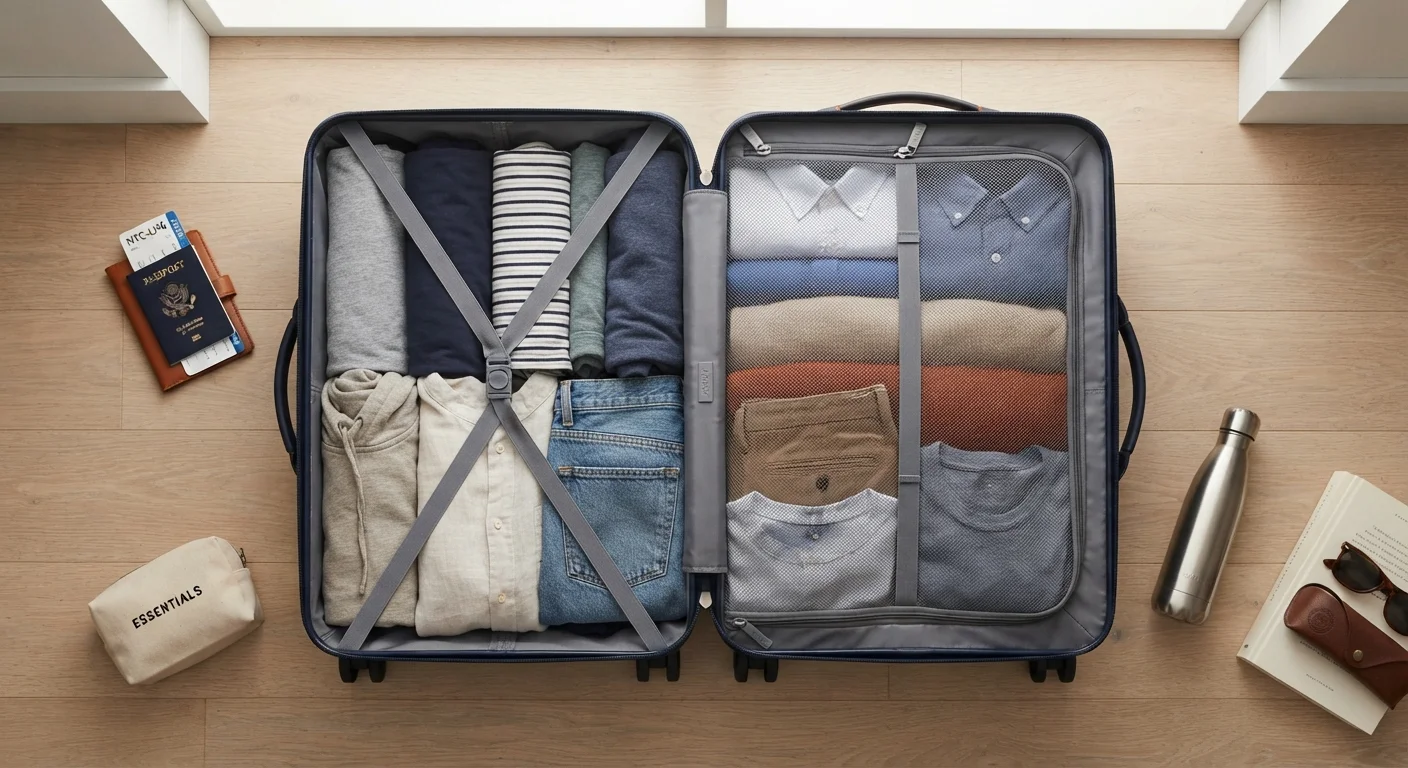
Does rolling really save space? Does folding reduce wrinkles? A clear breakdown of when each technique works best for different fabrics and bag types.
Option A
Rolling
The compact, wrinkle-resistant option for casual fabrics.
Best for: Soft, flexible clothing like t-shirts, jeans, and activewear packed into cylindrical or top-loading bags.
Option B
Folding
The structured, presentation-ready method for formal and delicate items.
Best for: Dress shirts, blazers, and structured garments packed into flat-opening suitcases.
Key takeaways
- Rolling generally uses space more efficiently in cylindrical or top-loading bags, while folding suits flat-opening suitcases better.
- Folding is preferable for structured garments like blazers and dress shirts, where sharp creases from rolling cause visible damage.
- Rolling reduces wrinkles in soft fabrics such as cotton t-shirts, jersey knits, and athletic wear.
- Combining both methods, rolling casual items and folding formal ones, typically outperforms using either method alone.
- Fabric type and bag shape are the two most reliable factors for deciding which method to use on any given item.
What the rolling method actually does
Rolling involves wrapping a garment into a tight cylinder before placing it in your bag. The main benefit is spatial: rolled cylinders fit snugly against each other and fill curved or irregular spaces that flat stacks leave empty. In a travel backpack or duffel, that matters because every unused pocket of air is wasted capacity.
Rolling also reduces wrinkles in soft, flexible fabrics. When you roll a cotton t-shirt or a pair of jersey-knit leggings, the fabric curls gradually rather than folding at a hard crease. The tension distributes across the whole garment, so there is no single stress point that leaves a line. This is why rolling has a strong reputation among travelers who pack primarily casual clothing.
The method has clear limits, however. Stiff, structured fabrics, particularly blazers, wool trousers, and dress shirts, do not bend easily. Forcing them into rolls compresses the collar, shoulder seams, and chest in ways that cannot be shaken out on arrival. If you are choosing between a backpack and a suitcase, the bag shape often determines whether rolling is practical before the fabric question even comes up.
What folding does, and where it holds up
Folding creates flat, rectangular units that stack in layers. In a hard-sided or soft-sided suitcase that opens clamshell-style, this is the most natural fit: you are essentially building horizontal strata of clothing that stay orderly during transit.
For structured garments, folding along the garment's own seams preserves their shape. A dress shirt folded along its shoulder seams and button placket will wrinkle less than the same shirt rolled into a cylinder. Blazers and suit jackets are conventionally folded inside-out along the center seam, which protects the outer fabric. These techniques work because they respect the garment's construction rather than forcing it into a foreign shape.
Folding is less efficient in bags with depth or irregular interiors, because flat stacks leave triangular corners and side pockets unusable. It is also slower to repack mid-trip: lifting and refolding a stack to reach something at the bottom takes more time than pulling a rolled item from a row of visible cylinders. If you want to think through how organizers interact with either method, the comparison of packing cubes, compression bags, and folder organizers covers that in detail.
| Criterion | Rolling | Folding |
|---|---|---|
| Space efficiency in backpacks | High: fills corners and curves | Low: leaves gaps at edges |
| Space efficiency in suitcases | Moderate | High: stacks cleanly in flat compartments |
| Wrinkle risk for soft fabrics | Low | Moderate (crease at fold lines) |
| Wrinkle risk for structured fabrics | High | Low when folded along seams |
| Repack speed mid-trip | Fast: items visible in rows | Slower: must lift stacks |
| Works with delicate fabrics | No | Yes, with care |
| Works with casual fabrics | Yes | Yes, but less compact |
How fabric type changes the calculation
The fabric question is more reliable than any general rule about rolling or folding. Cotton, jersey, nylon, and polyester are all flexible enough to roll without permanent creasing. Linen, silk, and structured wool are not: linen creases at almost any fold point, silk can develop roll-marks along stress lines, and structured wool holds compression shapes for hours after unpacking.
A middle category, light synthetic blends used in travel-specific clothing, generally rolls well precisely because manufacturers design them to be wrinkle-resistant. If you have been looking at wrinkle-resistance as a reason to switch garment types, the common myths about packing light article addresses some of the assumptions behind that reasoning.
30%
Potential space gain from rolling vs. folding
Travel gear testers at various consumer publications have estimated rolling can recover up to 30% more usable space in soft-sided bags compared to flat folding, though results vary by bag shape and garment type.
3 fabric types
Categories that fold better than they roll
Linen, silk, and structured wool are consistently identified by garment care guides as fabrics that crease or deform under the pressure of rolling, making flat folding the more reliable choice.
Denim is a practical outlier. Jeans are stiff enough that rolling can feel awkward, but they also hold a flat fold without creasing in a way that matters. Many travelers fold jeans flat and use them as a base layer, then roll softer items on top.
Using both methods in the same bag
The most effective approach for most trips is to apply each method to the garments it suits, rather than committing to one technique for everything. A concrete process: fold structured or delicate items flat and place them as the top layer in a clamshell suitcase, where they stay undisturbed. Roll soft casualwear into cylinders and use them to fill the sides, corners, and any remaining gaps. This keeps formal clothing accessible and unwrinkled while using irregular bag space that flat stacks cannot reach.
Packing cubes work well with this hybrid approach. A cube filled with rolled t-shirts compresses efficiently, while a folder-style organizer holds dress shirts flat. If you are also weighing the broader decision about bag type, the comparison of soft-sided and hard-shell luggage is worth reading alongside these packing techniques, since bag structure affects which method makes sense for the main compartment.
One habit worth building is unpacking rolled items promptly on arrival. Even wrinkle-resistant fabrics benefit from a few minutes hanging after a long transit. That step, combined with the right packing method for each garment, is usually enough to skip the hotel iron entirely.
The content on this site is for informational purposes only and is not a substitute for professional advice. Always consult a qualified professional for guidance specific to your situation.