
Certified Pre-Owned Versus a Standard Used Car

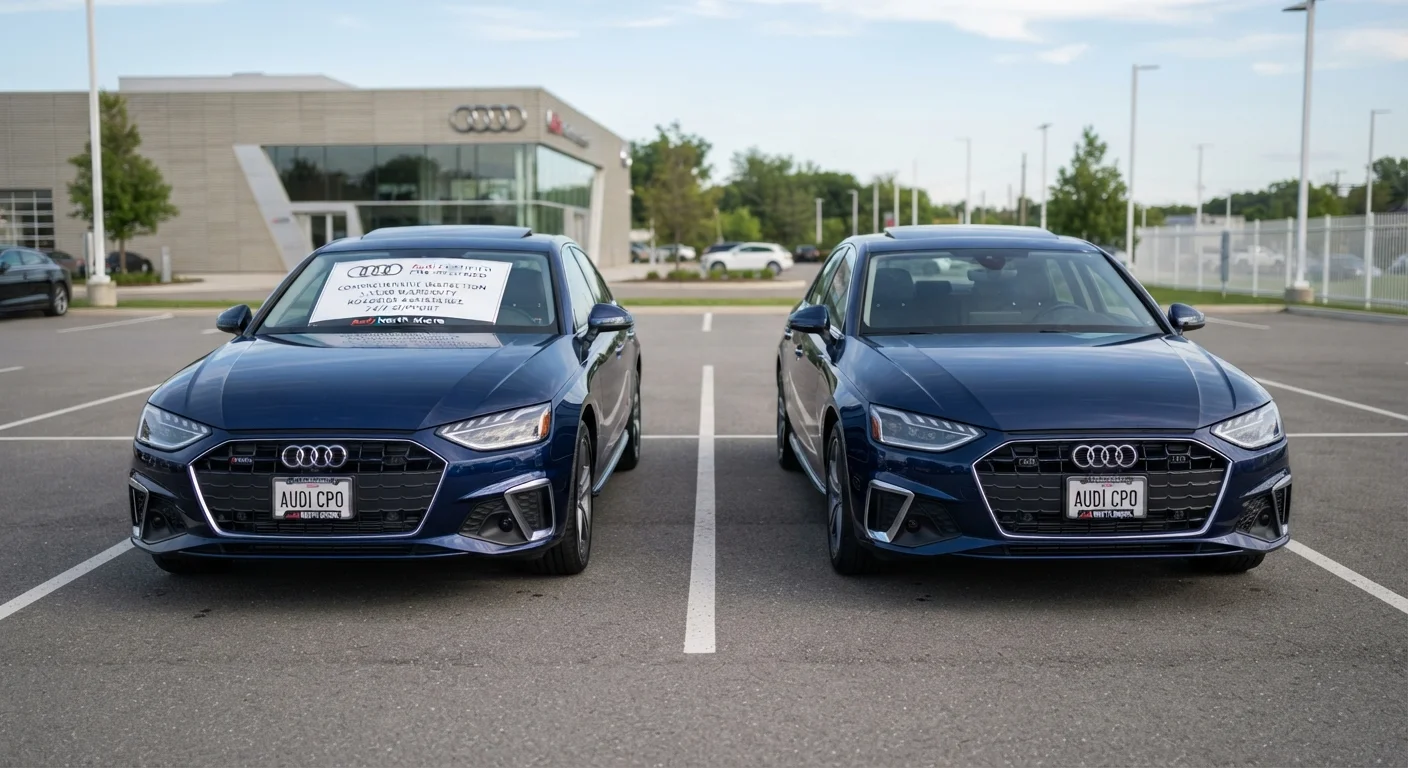
Understand the difference between CPO and regular used vehicles, including what certification actually means and whether it justifies the price gap.
Option A
Certified Pre-Owned (CPO)
The manufacturer-backed, inspected used car option.
Best for: Buyers who want warranty coverage and documented vehicle condition without purchasing new.
Option B
Standard used car
The flexible, lower-entry-cost used vehicle option.
Best for: Buyers who prioritize a lower purchase price and are comfortable managing their own due diligence.
Key takeaways
- CPO vehicles carry a manufacturer or dealer inspection and a warranty extension that standard used cars do not.
- CPO programs vary by automaker: the inspection checklist, warranty length, and covered components differ significantly.
- Standard used cars typically cost less upfront but come with no guaranteed inspection history or warranty.
- An independent pre-purchase inspection can reduce the risk of buying a standard used car.
- The CPO price premium is not always proportional to the warranty value, so comparing both numbers matters.
What CPO status actually means
A certified pre-owned vehicle has been inspected against a checklist set by either the automaker or the dealership, reconditioned where needed, and enrolled in a warranty program. That is the core definition. Beyond it, CPO programs differ considerably.
Manufacturer CPO programs, run by brands like Honda, Toyota, Ford, and others, require vehicles to meet age and mileage thresholds (often under five to six years old and under 80,000 miles), pass a multi-point inspection (typically 100 to 200 items), and carry a warranty that extends the original factory coverage. The warranty is backed by the manufacturer, which means repairs go through the same network as new-car service.
Dealer CPO programs are less standardized. A dealership may certify a vehicle under its own in-house program with a shorter warranty and a less rigorous inspection. The word "certified" on a dealer-certified car does not carry the same weight as a manufacturer CPO designation, so it is worth asking which type of program applies before placing any value on the label.
CPO warranty timing: know when coverage starts
If a CPO vehicle is still within its original factory warranty period, the CPO warranty typically activates after the factory coverage expires. Ask the seller exactly when each warranty term begins and ends, and get that in writing. Some programs also require that service be performed at authorized dealerships to keep the warranty valid.
If a CPO vehicle is still within its original factory warranty period, the CPO warranty typically activates after the factory coverage expires. Ask the seller exactly when each warranty term begins and ends, and get that in writing.
What you get with a standard used car
A standard used car carries no formal certification, no mandated inspection, and no included warranty unless the seller chooses to add one. It is sold as-is in most cases, which in practice means you accept the vehicle in whatever condition it is in at the time of purchase.
That does not make standard used cars a poor choice. The used-car market is large, and many well-maintained vehicles with clean histories are available at prices well below comparable CPO examples. The absence of certification shifts responsibility to the buyer to verify the vehicle's condition and history independently.
The tools available for that verification include a vehicle history report (services like Carfax and AutoCheck compile title history, reported accidents, and odometer readings) and an independent pre-purchase inspection from a mechanic you choose, not one selected by the seller. Those two steps together provide a reasonable picture of the vehicle's background and mechanical state.
For a broader look at how standard used vehicles compare to new purchases, this breakdown of new vs. used trade-offs covers depreciation and total cost factors worth reviewing before you commit to either category.
Side-by-side comparison
The table below compares CPO and standard used vehicles across the criteria that matter most to buyers.
| Criterion | Certified Pre-Owned | Standard used car |
|---|---|---|
| Inspection | Formal multi-point checklist | No mandated inspection |
| Warranty | Included extended warranty | Typically none (as-is) |
| Purchase price | Higher (certification premium) | Lower baseline price |
| Price negotiability | Limited | Generally more flexible |
| Vehicle age limits | Usually under 5-6 years old | No restrictions |
| History documentation | Provided by program | Buyer must obtain independently |
| Where sold | Franchised dealerships only | Dealerships and private sellers |
One factor the table does not capture is negotiating room. Standard used-car prices, whether at a dealership or through a private sale, are generally more negotiable than CPO prices. Dealers build the cost of certification into the asking price, and they have less flexibility to discount it.
Evaluating whether the CPO premium is worth it
The price gap between a CPO vehicle and a comparable standard used car can range from roughly $1,000 to $3,500 depending on the model, age, and market conditions. Whether that premium makes financial sense depends on how you value the warranty.
One way to evaluate it: find the retail cost of an equivalent third-party extended warranty for the standard used car you are considering. If the CPO premium is lower than that warranty cost, the CPO vehicle may represent better value for buyers who want coverage. If the premium is higher, a standard used car with an independent inspection may be the more efficient choice.
The total cost of ownership calculation, which includes insurance, expected maintenance, and fuel, is the right frame for this comparison. A lower sticker price can still produce higher overall costs if repairs are frequent or expensive.
Before signing anything, ask specific questions about the warranty terms: what is covered, what is excluded, which repair facilities are authorized, and whether the warranty is transferable if you sell the vehicle. Those details determine the real value of CPO status more than the certification label alone.
The content on this site is for informational purposes only and is not a substitute for professional advice. Always consult a qualified professional for guidance specific to your situation.