
Safe Following Distance: The Two-Second Rule and Its Limits

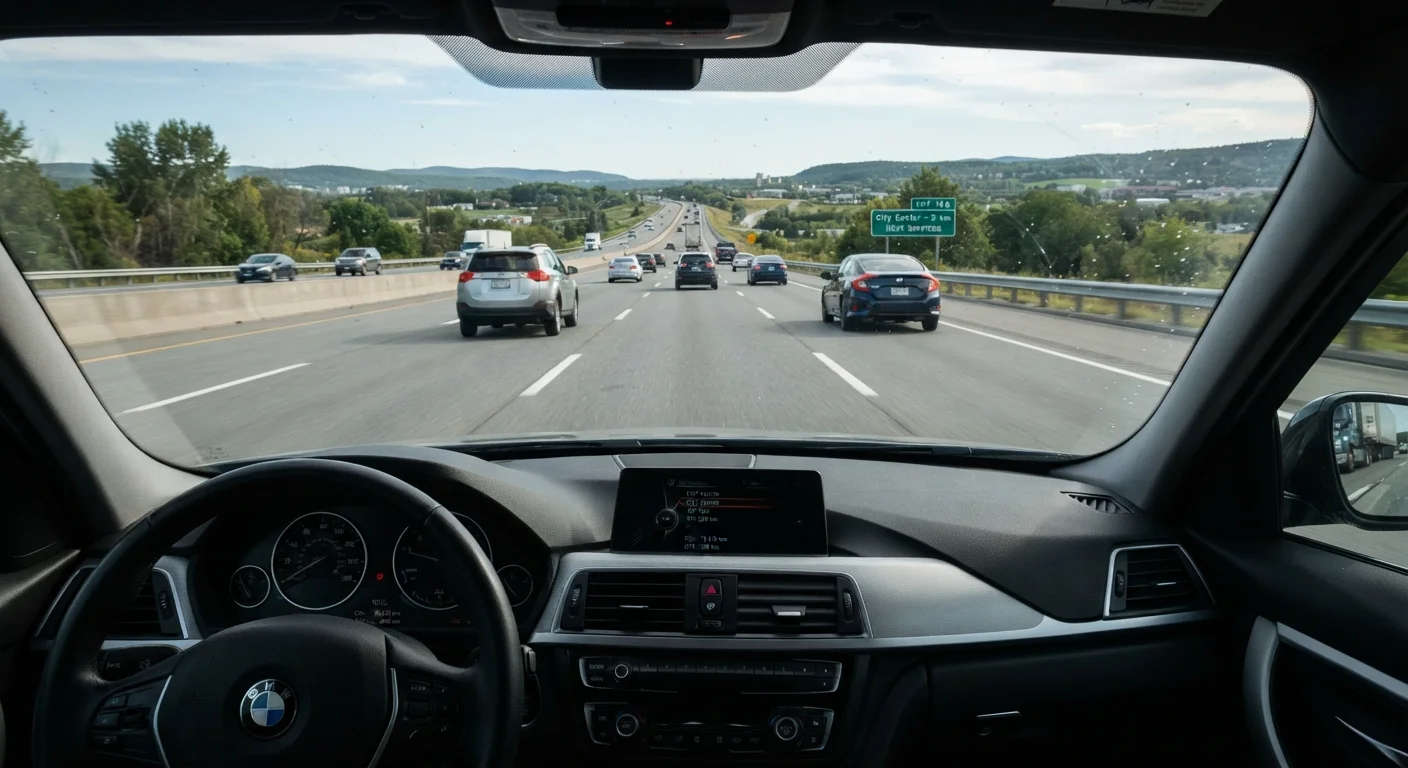
The two-second rule is a useful baseline, but speed, weather, and vehicle type can change everything. Here is how to apply it accurately.
Key takeaways
- The two-second rule gives a minimum gap at normal speeds, not a universal safe distance.
- Wet, icy, or foggy conditions require at least doubling the standard following interval.
- Heavy vehicles such as trucks and buses need significantly longer stopping distances than passenger cars.
- Driver fatigue and distraction effectively shrink your usable reaction time, eating into any gap you leave.
- Tailgating is a leading contributor to rear-end collisions, which account for a large share of all crashes.
What the two-second rule actually measures
The two-second rule is a mental shortcut: pick a fixed object ahead, watch the vehicle in front pass it, and count two seconds. If you reach that object before finishing your count, you are too close. The rule converts speed into distance automatically, which is its main advantage over trying to estimate car lengths.
What it does not do is account for stopping physics. Your gap needs to cover both your reaction time and your vehicle's braking distance. At 65 mph, two seconds gives you roughly 190 feet. A modern passenger car with good tires on dry pavement can stop from 65 mph in around 150 to 180 feet, so two seconds is genuinely close to the minimum under ideal conditions. Any change to those conditions, wet roads, worn tires, a heavy load, or reduced alertness, and that margin disappears.
Myth
Two seconds of following distance is always enough to stop safely, regardless of speed or conditions.
Fact
Two seconds is a minimum for dry roads at moderate speeds. At higher speeds or in poor conditions, that gap is insufficient.
At 30 mph, two seconds of travel equals roughly 88 feet. At 65 mph, the same two seconds covers about 190 feet. Meanwhile, stopping distance grows faster than speed: doubling your speed roughly quadruples the distance needed to stop. The two-second rule was designed as a simple mental tool, not a physics guarantee. On wet or icy roads, braking distance can extend by 2 to 4 times compared to dry pavement, meaning a two-second gap may leave you far short of the space needed to avoid a collision.
Myth
As long as you are paying attention, a short following gap is not really dangerous.
Fact
Attention does not eliminate reaction time. Even alert drivers need roughly 1.5 seconds to perceive and respond to a hazard.
Human perception-reaction time, the interval from seeing a hazard to applying the brake, averages around 1.5 seconds under normal conditions. Fatigue, distraction, or low lighting pushes that figure higher. A driver following at one second has already used their entire reaction budget before the brakes even engage. Driver fatigue compounds this: tired drivers often show reaction times comparable to those seen with alcohol impairment, turning a marginal gap into a certain collision.
Myth
The two-second rule applies the same way to trucks, SUVs, and motorcycles as it does to passenger cars.
Fact
Larger, heavier vehicles need considerably longer stopping distances, and the two-second rule must be scaled accordingly.
A fully loaded commercial truck can require 40 percent more stopping distance than a passenger car at the same speed, according to general figures from the Federal Motor Carrier Safety Administration. The vehicle's weight means brakes must dissipate far more energy before the vehicle stops. For motorcycles, the equation is different: bikes can often stop faster than cars, but they offer almost no protection in a collision, so maintaining a larger buffer protects the rider from being rear-ended. A three-to-four-second rule is more appropriate for heavy vehicles, and for any driver following a truck on a highway.
Myth
In slow city traffic, following distance matters much less than on the highway.
Fact
Urban driving involves frequent sudden stops, cyclists, and pedestrians, making consistent following distance just as important at low speeds.
Rear-end collisions are common in urban settings precisely because drivers shorten their gap when speeds drop. A pedestrian stepping into the road or a delivery vehicle stopping abruptly can require a full emergency stop from 20 to 25 mph, and that still demands several car lengths of clear space. Urban and highway driving present different hazards rather than different levels of risk, and following distance rules apply in both environments.
Myth
Rain only reduces traction slightly, so you only need a little extra following distance.
Fact
Even light rain can reduce tire grip significantly, and stopping distances on wet roads commonly double compared to dry conditions.
Water creates a film between the tire and the road surface, reducing the friction available for braking. The effect is strongest in the first minutes of rainfall, when road oils mix with water before washing away. Hydroplaning, where the tire rides on water rather than pavement, can occur at speeds as low as 35 mph on worn tires. Wet and icy conditions each demand their own adjustments: the standard guidance for rain is to use a four-second minimum, and for ice or snow, considerably more.
When two seconds is not enough
Speed, vehicle type, and road surface each affect how much space you actually need. Posted speed limits establish a legal ceiling, not a safe following prescription. On a wet highway, the standard guidance is to use four seconds as your minimum, and on ice or snow, eight or more seconds is appropriate.
Heavy vehicles carry the same issue in a different form. A loaded pickup towing a trailer, or a driver following a semi-truck, should apply at least three to four seconds of gap. The truck ahead may stop faster than you expect it to, or its length may obscure a hazard until you are nearly on top of it.
Tailgating raises crash risk sharply
Closing to under one second of following distance leaves almost no time to react to a sudden stop. Even an attentive driver needs roughly 1.5 seconds just to perceive a hazard and move their foot to the brake. Following too closely eliminates that window entirely. See how gap-distance math works for a fuller breakdown.
Fatigue also reduces the usable value of any gap. A tired driver's reaction time can stretch well beyond the average 1.5 seconds, meaning a three-second gap may effectively shrink to a one-second margin by the time the foot reaches the brake. Managing driver fatigue is a direct part of maintaining safe following distance, not a separate topic.
Building the habit correctly
Consistent following distance is not about one careful moment; it is about resetting the gap after every lane change, speed shift, or traffic density change. When a vehicle merges into your buffer, ease off the accelerator gently to restore space rather than braking sharply, which risks the driver behind you.
In urban driving, where gaps fill quickly, the temptation is to close up to prevent vehicles from cutting in. That instinct increases risk. A two-to-three-second gap in city traffic still leaves room for most cut-ins and provides the stop space needed when a pedestrian or cyclist appears without warning. Urban and highway environments both reward consistent spacing, even if the correct interval differs between them.
Weather changes require an immediate adjustment. Rain starting mid-trip means adding two seconds to your current gap before the road surface becomes noticeably slick. Adapting to rain, snow, and fog covers the full picture of how each condition affects traction and visibility, which together determine how much distance you truly need.
The content on this site is for informational purposes only and is not a substitute for professional advice. Always consult a qualified professional for guidance specific to your situation.