
The Capsule Travel Wardrobe Explained

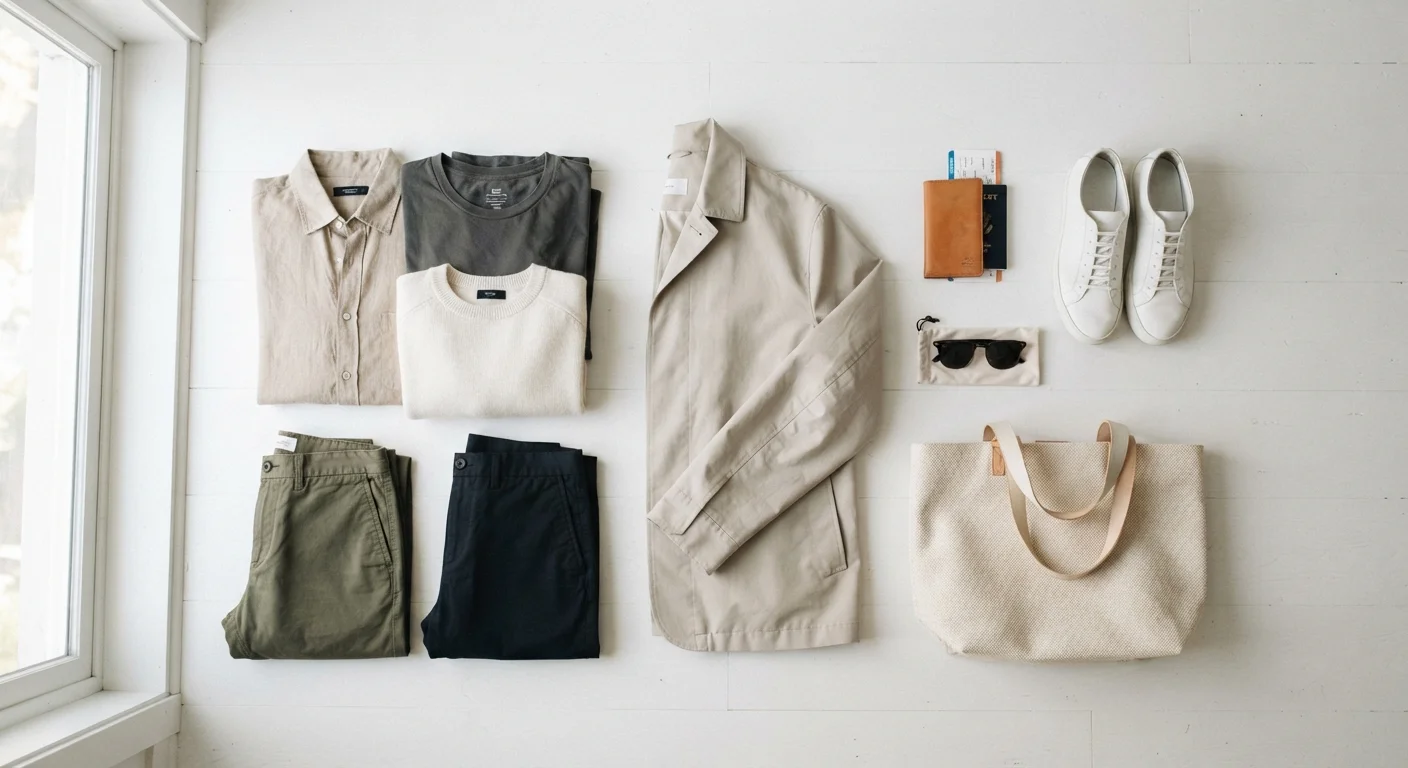
What a capsule travel wardrobe is, why it works, and how mix-and-match clothing choices reduce what you carry without limiting your options.
Key takeaways
- A capsule travel wardrobe relies on mix-and-match compatibility, not sheer quantity of items.
- Neutral colors and versatile cuts multiply outfit combinations without adding weight.
- Choosing pieces by function rather than occasion reduces redundancy in a bag.
- A smaller wardrobe fits a carry-on, which cuts checked baggage costs and wait times.
- The method works for trips of varying lengths once the core system is understood.
What makes a wardrobe a 'capsule'
The word 'capsule' signals containment, not sacrifice. A capsule travel wardrobe is defined by internal compatibility: each garment was selected because it coordinates with the others, not because it suits a single planned outfit. Pull any top and any bottom from the bag, and the combination works. That compatibility is what allows a small number of pieces to cover a full itinerary without leaving the traveler feeling underdressed or unprepared.
A collection of random clothes in a suitcase is not a capsule, even if the count is low. The organizing principle is deliberate coherence: shared color palette, complementary cuts, and fabrics that transition between settings. Without that coherence, packing light just means packing fewer clothes and running out of options. With it, the same item count covers far more situations.
If you are new to structured packing, the introduction to packing and gear covers foundational concepts that provide useful context before building a capsule system.
Why the math works in your favor
Outfit combinations grow faster than item count. Five tops and four bottoms produce twenty possible top-and-bottom pairings before layering pieces or accessories are added. Add two layering items and the number of distinct looks increases substantially. This combinatorial reality is the practical core of the capsule method: the traveler is not limiting choices, they are structuring them so that every item actively expands the option set.
20+
Outfit combinations from 9 pieces
Five tops paired with four bottoms produce twenty distinct combinations before layering or accessories are factored in, illustrating how combinatorial logic multiplies options.
3-4
Neutral base colors recommended
Wardrobe planning guides consistently note that limiting a palette to three or four coordinating neutrals ensures all items pair with each other without coordination effort.
Contrast this with packing by occasion, where a traveler packs one outfit for a nice dinner, one for a day hike, one for a flight, and so on. That approach produces less flexibility because no item does double duty. One formal top that cannot be worn casually takes the same space as a versatile piece that works in four situations, and contributes far less to the overall wardrobe.
The carry-on-only packing framework goes further into how the capsule method integrates with bag selection and volume limits.
How to build one before a trip
Start with the trip's range of activities rather than its length. A five-day city trip with one restaurant dinner and daily walking has a different functional need than a five-day trip mixing beach time and sightseeing. List the actual situations, not the days, and identify which activity type repeats most. Those repeating situations should anchor the wardrobe.
Select a neutral color base for the majority of pieces: three to four tones that all pair with each other. Then choose items that cover the most frequent activity first, layering items second, and any specific-occasion pieces third. If an item only works in one situation on the list, consider whether it earns its space against a versatile alternative.
Fabric choice is a practical constraint, not an aesthetic one. Quick-dry fabrics allow washing in a hotel sink overnight, which can effectively double a wardrobe's range on longer trips. Wrinkle-resistant materials remove the need for ironing, which matters when packing compressed in a carry-on. The psychology behind overpacking often explains why travelers resist these practical choices in favor of 'just in case' items that never get used.
Common points where the system breaks down
The capsule method fails most often when travelers build a compatible wardrobe and then add items outside the system. A statement piece in a color that matches nothing else, or a pair of shoes that works only with one outfit, re-introduces the redundancy the system was designed to eliminate. Every addition should pass the same test as the original selections: does this work with at least two other items already in the bag?
Climate variability trips up even experienced packers. A trip spanning multiple climates needs layering logic rather than separate wardrobes for each climate. A lightweight base layer, a mid-layer that packs small, and a packable outer shell cover a wide temperature range and take less space than packing separate heavy items for the cold segment alone.
Choosing the right bag to hold a capsule wardrobe matters too. Backpack versus rolling suitcase considerations affect how items compress, whether packing cubes fit efficiently, and how accessible the wardrobe is during travel days.
Test combinations before you pack
Lay out every item you plan to bring and physically pair each top with each bottom before the bag is packed. Any item that pairs with fewer than two others is a candidate to remove or replace. This takes about ten minutes and prevents the 'nothing goes together' problem that happens mid-trip.
Frequently Asked Questions
The content on this site is for informational purposes only and is not a substitute for professional advice. Always consult a qualified professional for guidance specific to your situation.